

Talk
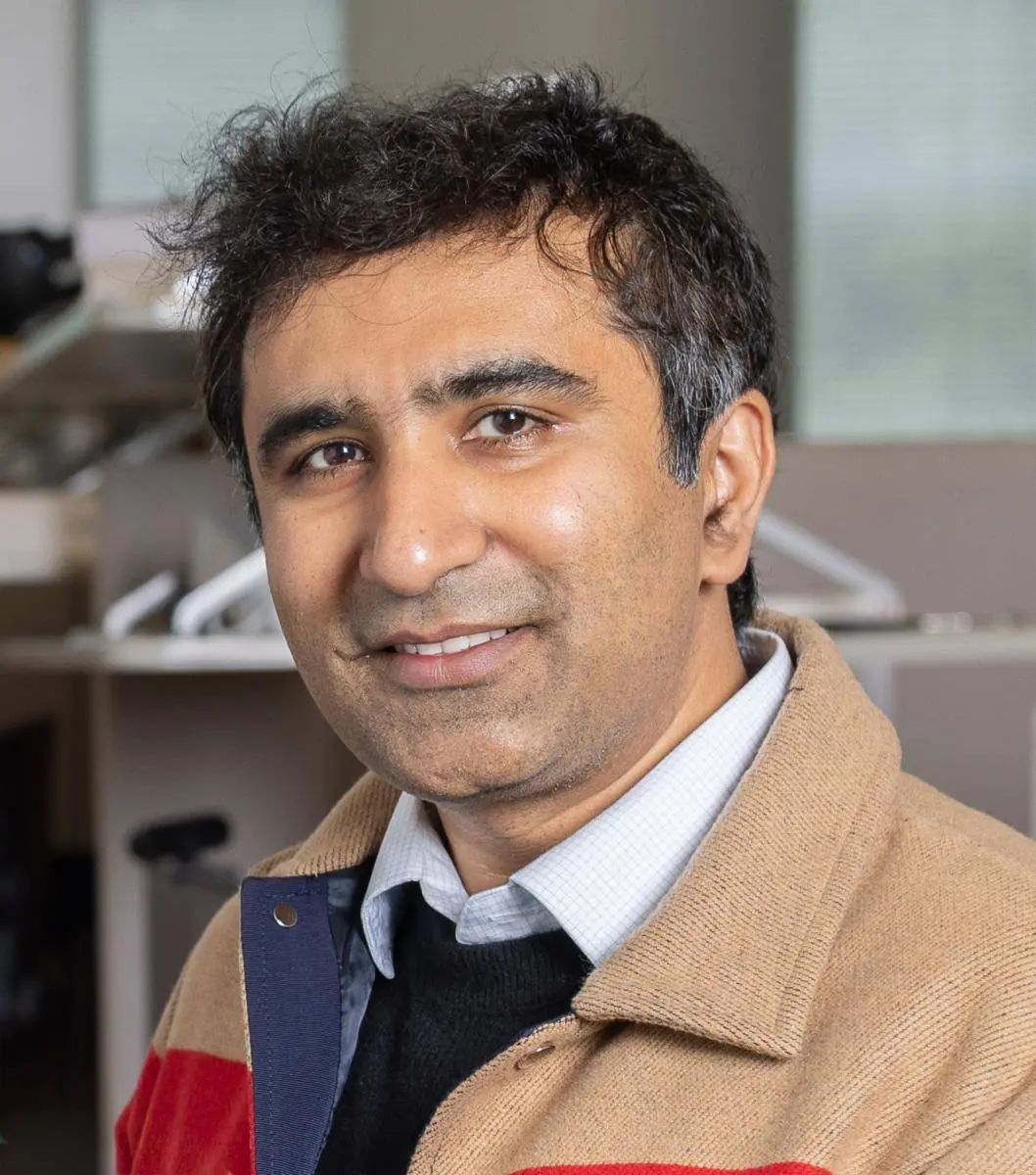
Talk by Tushar Krishna
Title: Modeling and Optimizing Communication in Distributed AI Datacenters
Abstract:
Generative AI use cases have led to the emergence of distributed systems (aka AI datacenters) at scales of 100,000+ accelerators. In such distributed clusters, frequent synchronization across the accelerator devices is inevitable. This makes the design and optimization of the network fabric a crucial component for overall performance and efficiency. Designing an optimized fabric for AI datacenters is an open and active challenge today – with massive co-design opportunities spanning across technology (e.g., waferscale, photonics), hardware architectures (i.e., network topologies) and software scheduling (e.g., optimal collective algorithms).
This talk will introduce our work towards a systematic co-design approach for designing and deploying scalable network fabrics for AI datacenters. In particular, we will deep dive into two frameworks. First, we present ASTRA-sim, a distributed AI system simulator. ASTRA-sim can model and simulate the end-to-end stack of AI datacenters spanning workload, scheduling, hardware architectures and technologies. ASTRA-sim enables easy plug-ins of customized workload descriptions, collective algorithms and network fabric implementations via a suite of APIs (being standardized via MLCommons and OCP). Second, we present TACOS, a Topology-Aware Collective Algorithm Synthesizer. TACOS automates the generation of topology-aware collective algorithms for arbitrary network topologies using the time-expanded network data structure and a novel link-chunk matching algorithm. Evaluated over future systems (simulated via ASTRA-sim) and real deployments over existing systems, TACOS demonstrates speedups over the state-of-the-art libraries today (e.g., NCCL) and scalable synthesis of customized collective algorithms for tens of thousands of accelerators.
Speaker Bio:Tushar Krishna is an Associate Professor in the School of Electrical and Computer Engineering (ECE) at Georgia Institute of Technology, with a courtesy appointment in Computer Science. He held the ON Semiconductor (Endowed) Junior Professorship in ECE at Georgia Tech from 2019-2021. He has also been a visiting professor at MIT EECS + CSAIL, Harvard University CS and a researcher at Intel’s VSSAD group. He has a Ph.D. in Electrical Engineering and Computer Science from MIT (2014), a M.S.E in Electrical Engineering from Princeton University (2009), and a B.Tech in Electrical Engineering from the Indian Institute of Technology (IIT) Delhi (2007).
Dr. Krishna’s research spans computer architecture, interconnection networks, networks-on-chip (NoC), and AI/ML accelerator systems – with a focus on optimizing data movement in modern computing platforms. His research is funded via multiple awards from NSF, DARPA, IARPA, SRC (including JUMP2.0), Department of Energy, Intel, Google, Meta/Facebook, Qualcomm and TSMC. His papers have been cited over 23,000 times. He has been a recipient of multiple IEEE Micro’s Top Picks and best paper awards across computer architecture and design-automation conferences. He is part of the Halls of Fame of all three of the premier computer architecture conferences: MICRO, HPCA and ISCA. He was a recipient of the “Under 40 Innovators Award” at DAC in 2025 and the ACM SIGARCH Maurice Wilkes Award in 2026.
Dr. Krishna currently serves as a Co-Director for the Center for Research into Novel Computing Hierarchies (CRNCH) – a cross-disciplinary research center at Georgia Tech. He is also a co-chair of the Chakra Execution Traces and Benchmarks Working group within ML Commons.
- 16 - 16 July,2026
- 11:00 am - 12:00 pm
- SIT 001