

Talk
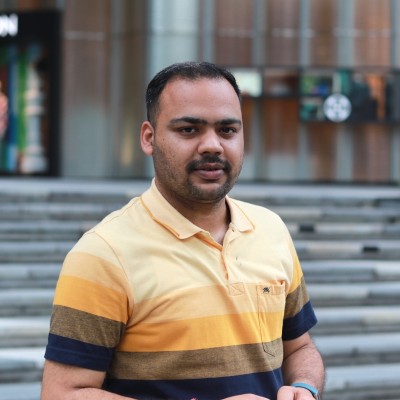
Talk by Parikshit Pareek
Title: Optimization Proxies for Power Systems: The Idea, Data Efficiency, Feasibility, and Confidence
Abstract:
Solving an optimization problem repeatedly is a core computational bottleneck in various operation and planning problems. Optimization proxies promise to amortize this cost: a machine-learning model, trained offline, that maps grid inputs directly to near-optimal dispatch in a single forward pass. Yet standard deep-network proxies tend to fail exactly where it matters, producing point predictions with no measure of trust, violating operational constraints, and demanding large labeled datasets and long training times that the operational setting rarely affords. This talk will start with the idea of an optimization proxy and rethinks what a deployable proxy must provide. It argues that proxies for safety-critical systems should be data-efficient, feasibility-aware, and uncertainty-quantifying by construction rather than as afterthoughts. The centerpiece is a semi-supervised Bayesian Neural Network proxy for ACOPF that trains in a sandwiched fashion, alternating a supervised step that minimizes generation cost with an unsupervised step that enforces constraint feasibility, so that it learns from scarce labeled data while staying feasible, and returns calibrated confidence bounds on every prediction. The talk situates this within a broader program of verifiable amortized inference for power systems, connecting Bayesian proxies, Gaussian-process uncertainty propagation, and size of these proxies.
Speaker Bio:Parikshit Pareek is an Assistant Professor in the Department of Electrical Engineering at IIT Roorkee, where he leads the P²-Lab. His research develops verifiable amortized inference for engineering systems, spanning prior-data fitted networks, Bayesian machine learning, and Gaussian processes, with applications to power and energy systems. His current work focuses on the attention mechanisms, scaling behavior, mechanistic interpretability, and test-time adaptation of in-context learners, and on extracting explicit, reusable Bayesian structure from them. He was previously a PostDoc at at Los Alamos National Laboratory, USA. He earned his Ph.D. in Electrical Engineering from NTU, Singapore, and his M.Tech in Energy Studies from IIT Delhi.
- 10 - 10 June,2026
- 05:00 pm - 06:00 pm
- EE Committee Room